






Tampa Bay's True-Crime Economy

How podcasts, YouTube and independent producers are turning crime stories into a growing entertainment business
TAMPA, Fla. — True crime was once largely the territory of paperback writers, network television producers and programs such as Dateline and 48 Hours. Today, a microphone, cameras and a small production team can turn a criminal case into a podcast episode or YouTube documentary capable of reaching hundreds of thousands—or millions—of viewers.

In Tampa Bay, that transformation is helping create a small but increasingly visible media economy.
Podcasters, YouTube creators, researchers, editors, investigators and independent production companies are producing crime-related programming for audiences far beyond Florida. The result is an industry that sits somewhere between journalism, entertainment and the creator economy.
Tampa already has much of the infrastructure necessary to support it. Film Tampa Bay describes Hillsborough County as having an established crew base, production vendors and locations ranging from dense urban neighborhoods to waterfronts, industrial areas and rural communities.
But digital distribution has changed the economics.
A traditional television producer once needed a network willing to finance and distribute a program. Today, creators can publish directly through YouTube, Spotify and other platforms, building an audience before a television executive ever becomes involved.
True crime is particularly suited to that model. Long-form stories encourage audiences to watch or listen for extended periods, while one investigation can be transformed into multiple products: a two-hour interview, a documentary, podcast episodes, short-form clips and social-media posts.
Tampa-area creators are already participating in that ecosystem.
Crime and Coffee Couple, hosted by Allison and Mike Pernecky from suburban Tampa, publishes weekly true-crime programming. The operation extends beyond its podcast into merchandise and a newsletter—an example of how a program can become a consumer brand rather than simply an audio show.
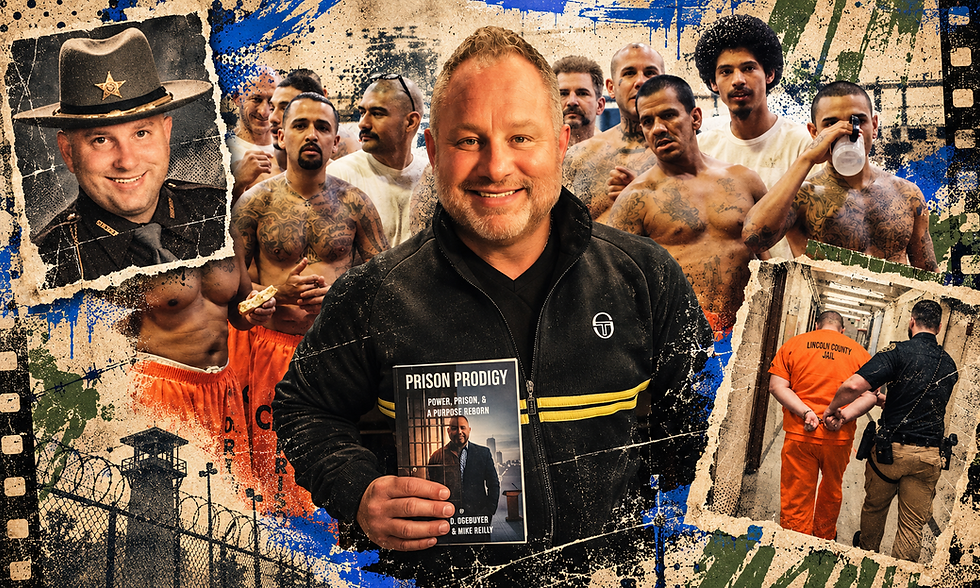
Tampa-based Inside True Crime similarly combines long-form interviews and crime storytelling with digital video. Its host, Matthew Cox, brings an unusual perspective as a former federal inmate whose own fraud case was featured extensively in national media. The show's production operation includes a dedicated producer and relies heavily on firsthand accounts from people connected to the criminal justice system.
The larger industry demonstrates just how valuable that audience can become. Successful crime properties increasingly move between podcasts, YouTube and television rather than remaining confined to one platform. Weinberger Media, for example, produces both television crime programming and Anatomy of Murder, a podcast it says has surpassed 170 million downloads.
That convergence is important for Tampa.
A successful local true-crime production does more than employ a host. Researchers locate court records and witnesses. Producers arrange interviews. Editors assemble hours of footage. Graphic designers create thumbnails. Camera operators, sound engineers and studio operators support production. Attorneys may review sensitive material, while investigators and retired law-enforcement officers increasingly appear as experts.
One story can therefore support an entire production pipeline.
There is another valuable commodity involved: intellectual property.
A compelling investigation that begins as a podcast can potentially become a documentary, book, streaming series or licensed television production. Media producers increasingly view podcasts not simply as finished programs but as testing grounds where stories can develop audiences before being adapted into other formats.
The business nevertheless carries responsibilities that ordinary entertainment does not.
The victims are real. Their families are real. Suspects may never have been convicted. Careless accusations can damage reputations, while sensationalizing murder can transform personal tragedy into spectacle. Successful creators therefore face a constant tension between attracting viewers and maintaining accuracy and fairness.
That tension is unlikely to diminish.
Neither is America's appetite for true crime.
For Tampa Bay, the opportunity may lie in recognizing that crime storytelling is no longer merely a television genre. It is becoming part of the broader creator economy—one capable of supporting studios, employees, freelancers and independent media companies.
Hollywood once controlled the cameras and television networks controlled distribution.
Today, a compelling story told from a Tampa studio can reach the world before either one gets involved.


Comments