






From Sheriff to Inmate to Advocate: Kyle Overmyer Tells His Story in Prison Prodigy

When Kyle Overmyer was appointed sheriff of Sandusky County, Ohio, at age 34, he became one of the youngest sheriffs in the state's history. Eight years later, he was in a prison cell. Now, a decade after his fall, the former lawman has written a memoir about how he got there and what he found on the other side.
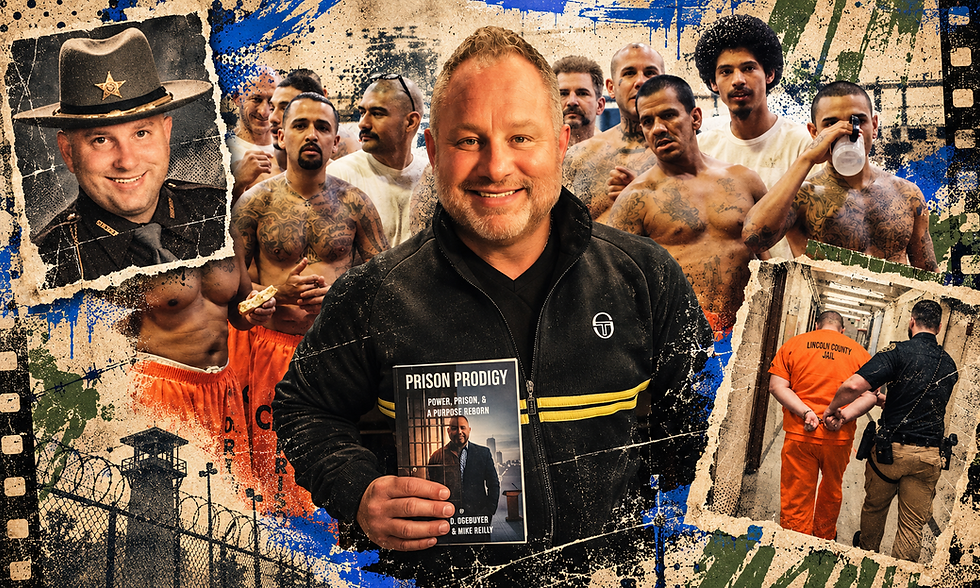
Prison Prodigy: Power, Prison, & a Purpose Reborn, co-written with Natalie June Reilly, was published in April 2026. The 173-page paperback traces Overmyer's path from small-town lawman to opioid addict to state prisoner, and finally to his current work as a recovery advocate. His wife, Jennifer, marked the release on social media with a message that captures the book's tone: "They counted him out… God counted him in."
A rising star
Overmyer grew up in rural Ohio, the son of a longtime sheriff's deputy he describes as a stoic man who never once told his son he loved him. Kyle followed his father into law enforcement and built a reputation as an aggressive narcotics investigator. In the book, he describes undercover work that reads like a crime thriller, including posing as a buyer to infiltrate a tractor-theft ring and a long-running sting with the DEA that involved ordering cocaine shipments from Mexico.
He was appointed sheriff after the death of his predecessor and mentor. He went on to win two terms, and to voters he was a tough, effective drug warrior.
The secret behind the badge
What the public didn't know was that Overmyer was addicted to prescription painkillers. In the memoir, he describes a habit that started with pain management and escalated into full-blown opioid dependence. He writes that he was taking pills before speeches while running one of the region's most aggressive anti-drug operations, and stealing from his own father's prescriptions.
The habit eventually became a crime. A state investigation began in August 2015, after Overmyer collected prescription-drug take-back boxes from local police departments. Several police chiefs in the county had found it strange that the sheriff was collecting pills from the drop boxes. At the time, Overmyer insisted he collected them to improve communication between agencies, and he called the investigation politically motivated.
In August 2016, a grand jury returned a 43-count indictment. It accused him of stealing medications from drug disposal boxes, deceiving doctors to obtain painkillers, and misusing department funds. Overmyer refused to resign. He ran for re-election while under indictment and lost, then pleaded guilty to a reduced set of felony charges.
In December 2016, he was sentenced to four years in prison and three years of supervision afterward, and ordered to repay $24,000 to Sandusky County. Four local police chiefs sat behind him in court and condemned him for betraying the public's trust. One, Clyde Police Chief Bruce Gower, called him "the worst kind of criminal — one with a badge." Overmyer cried as he addressed the court and apologized to the deputies who had once served under him. The judge and special prosecutor said they did not believe he was remorseful.
The memoir doesn't spare him on this. Overmyer describes his denial, his reckless decisions while awaiting trial, and the public humiliations that followed. In his telling, the fall wasn't caused by the drugs alone but also by his own refusal to admit he needed help.
Inside the walls
Overmyer served his sentence at the Allen-Oakwood Correctional Institution, a former sheriff now housed among men like those his office had once put away. The prison sections are the heart of the book. He describes spending his first Christmas in solitary confinement, his call to his children cut off by a failing phone system. He leaves protective custody to join the general population. He forms unlikely friendships, including with a young gang member who introduces him to Islam and with whom he fasts through Ramadan. He gets his children's names tattooed on his arms with a homemade tattoo gun.
He also describes the moment he says his faith took hold, alone in a cell with nothing left to lose. While incarcerated, he earned a chemical dependency counseling credential, and he says he refused drugs every day of his sentence despite how easy they were to get.
Starting over
Overmyer was released in April 2020, homeless and broke, at the start of the COVID-19 pandemic. The book's post-prison chapters are among its most striking. He writes about pulling a pair of secondhand dress shoes from a dumpster to wear to a job interview. He fried chicken for $9.50 an hour at a restaurant where he once ate lunch with his deputies, while some locals posted mocking photos of him online. He slept for months on an air mattress in a friend's spare room.
Then his life began to rebuild. A woman named Jennifer reached out after following his recovery posts on social media. She drove up from Columbus, stayed a week, and fell deeply in love with him. She was convinced of his redemption and within 6 weeks she proposed to him while he was still on parole. They married at Serenity Farms in Lancaster, Ohio.
A new mission
Today, Overmyer says he has been sober for more than ten years. He founded KO Addiction, a recovery and speaking organization, and says he has given more than 50 talks at prisons, courthouses, medical schools, and healthcare conferences. He's also touring Ohio's state prisons to share his story with incarcerated people at no charge, and serves on the Ohio Department of Rehabilitation and Correction's Reentry Coalition board. In a recent podcast interview, he said he has returned to the law enforcement world in a different role, as a business development director for an Ohio software company serving police agencies.
He has been promoting the book on podcasts. On Locked In with Ian Bick, he sat down with Michael Smith, a former police officer, in an episode billed as a corrupt cop and a good cop meeting face to face. The book also carries an endorsement from Matthew Cox, host of Inside True Crime, who calls it a brutally honest story of power, addiction, and accountability.
Why it matters
Overmyer's story stands out among opioid-crisis accounts because he lived on both sides of it. He enforced the drug war while secretly becoming one of its casualties. In the book, he argues that the trauma of police work, including fatal shootings, drowned children, and a culture that treated asking for help as weakness, helped drive him to the pills. He doesn't use that as an excuse. He offers it as a warning for first responders who may be quietly struggling.
Not everyone in Sandusky County has forgiven him, and the book doesn't ask them to. What it offers instead is a hard-won argument that a person's worst chapter does not have to be the last one. As Overmyer puts it: "Your past should never define you — only refine you."



Comments