






Whatever Happened to Hip-Hop? How Rap Lost Its Grip on the American Music Charts

For nearly two decades, hip-hop didn't simply participate in American popular culture. It dominated it.
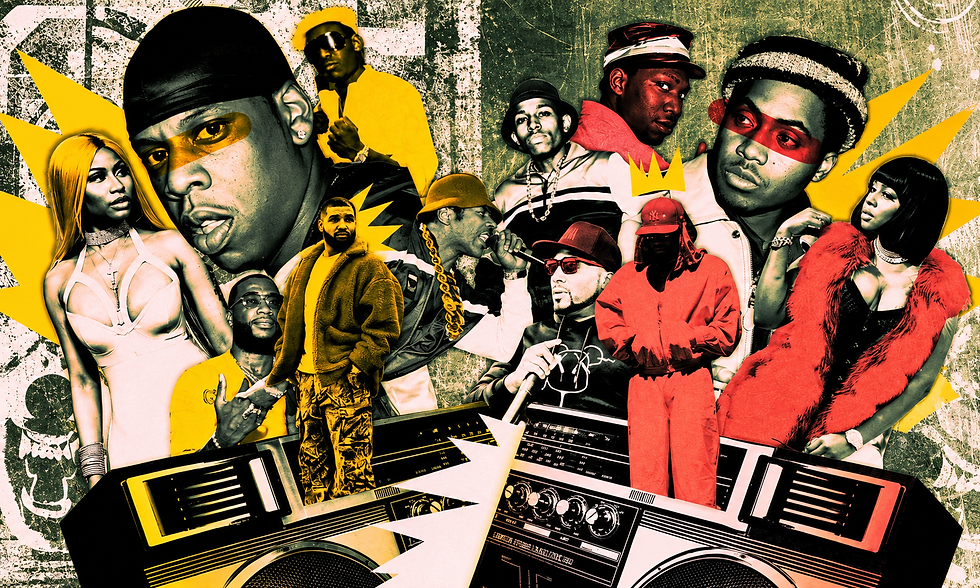
Rappers became fashion icons, entrepreneurs and celebrities. Drake, Kanye West, Kendrick Lamar, Nicki Minaj, Future and Travis Scott routinely occupied the upper reaches of the charts. Rap's language, fashion and production techniques spread throughout popular music.
But something has changed.
In 2025, hip-hop/rap accounted for just 19 percent of Billboard Hot 100 Top 10 hits, down from 38 percent the previous year. Pop, meanwhile, surged to 42 percent. It was hip-hop's weakest Top 10 showing since 2016.
Then came a statistic that would have been almost unimaginable a few years earlier.
For one week in October 2025, there wasn't a single rap song in the Billboard Hot 100's Top 40—the first time that had happened since February 1990. A change in Billboard's rules contributed to the unusual result by pushing older hits off the chart, but the moment still highlighted a larger shift.
Rap Isn't Dead
The numbers don't support that conclusion.
R&B/hip-hop remains America's largest streaming category. During the first half of 2026, it generated roughly 180 billion U.S. streams, comfortably ahead of rock, pop, country and Latin.
The problem for hip-hop is that everyone else is growing.
Luminate's 2026 Midyear Report shows an increasingly diverse American music market. Nearly one in 10 U.S. streams is now Spanish-language music, while Latin's casual monthly listenership reached 54 percent early this year. Dance/electronic was the fastest-growing U.S. genre by share during the first half of 2026.
Country has also become a major competitor. During the first half of 2025, country actually became the leading primary genre among Hot 100 Top 10 entries, accounting for 29 percent.
Hip-hop suddenly has considerably more competition for America's attention.
Where Are the New Superstars?
There is another issue facing rap: the superstar pipeline.
Hip-hop's previous generation produced performers who transcended the genre. Jay-Z, Eminem, Kanye West, Lil Wayne, Drake, Nicki Minaj and Kendrick Lamar became household names.
Today's rap landscape is far more fragmented.
Streaming and social media have made it possible for hundreds of artists to develop substantial audiences without producing a record everyone in America knows. Listeners can disappear into drill, trap, melodic rap, underground hip-hop and dozens of regional scenes.
That's good for musical diversity but makes cultural domination more difficult.
Meanwhile, pop has staged an impressive comeback. Taylor Swift and Sabrina Carpenter helped drive pop's 2025 resurgence, while international and K-pop acts expanded the competition for American listeners.
There is an irony to hip-hop's declining chart dominance.
Rap may have become a victim of its own success.
Listen closely to contemporary pop, R&B, Latin and even country and hip-hop's fingerprints are everywhere: programmed drums, bass-heavy production, rhythmic vocal delivery, collaborations and fashion.
Hip-hop didn't disappear from American culture.
In many ways, American culture became hip-hop.
What has disappeared—at least for now—is the period when one genre could seemingly command the entire country's attention.
Rap remains enormous. But after spending years at the center of American popular music, hip-hop is discovering something every dominant genre eventually learns: The center of popular culture never stays in one place forever.
Comments