






Silo: How a Self-Published Novel Became One of Apple’s Biggest Science-Fiction Worlds

Apple’s dystopian series began not in Hollywood, but with a short story that author Hugh Howey published himself — and that readers refused to let end.
In the crowded world of post-apocalyptic television, few series have built a universe quite as claustrophobic — or mysterious — as Silo.

The Apple TV drama imagines roughly 10,000 people living inside a massive underground structure, 144 stories deep, generations after humanity apparently became unable to survive on the surface. Residents are taught that the outside world is deadly. They don't know who built the silo, exactly what happened to civilization or why many questions about the past are forbidden.
At the center of the television series is Juliette Nichols, played by Rebecca Ferguson, an engineer from the mechanical levels whose instinct for fixing machines eventually becomes an obsession with understanding the society around her.

The show's real origin, however, may be as interesting as its fictional one.
From Wool to Silo
Author Hugh Howey originally released Wool as a self-published short story in 2011. Instead of disappearing among thousands of independently published works, the story attracted readers who wanted more.
Howey responded by expanding the world.

The original story became the beginning of five interconnected Wool installments, eventually collected into the novel now known simply as Wool. Howey then expanded the saga with Shift, which explores the origins of the silos, and Dust, which brings the central trilogy toward its conclusion.

That history gives Silo an unusual place in modern publishing. The property that eventually became an expensive international television production essentially began as an independently published digital experiment.
A Mystery Built Underground
What makes Silo work is that its science-fiction premise is really a framework for something more familiar: a story about information and power.
The people underground are governed by elaborate rules. Certain technology and knowledge are restricted. Artifacts from the past can be dangerous to possess. Asking the wrong questions can attract attention.

Most ominously, anyone who declares that he or she wants to leave is permitted to do so — but cannot return.
The television adaptation, created by Graham Yost, preserves the central mystery of Howey's books while expanding characters and storylines to accommodate serialized television. Ferguson's Juliette provides the emotional center, while characters played by Common, Harriet Walter and others represent competing forces inside the underground society.
The series premiered in 2023 and has since grown substantially. Apple renewed it through a fourth and final season, with the intention of completing Howey's trilogy rather than allowing the television adaptation to remain unfinished.
The Story Gets Bigger
The timing is particularly interesting because Silo is currently in its third season. Season three premiered July 3, 2026, and begins revealing the origins of the underground world while continuing Juliette's story. New characters include journalist Helen Drew, played by Jessica Henwick, and Congressman Daniel Keene, played by Ashley Zukerman, whose storyline takes place centuries earlier.

That shift reflects the structure of Howey's books. Wool introduces the mystery. Shift begins explaining how such a civilization could have been created in the first place. Dust ultimately brings those threads together.
For viewers who have never read the novels, however, knowing too much would undermine much of the pleasure.
The genius of Silo is not simply discovering what happened to the world outside. It is watching characters slowly realize that nearly everything they understand about their own world may have been deliberately constructed.
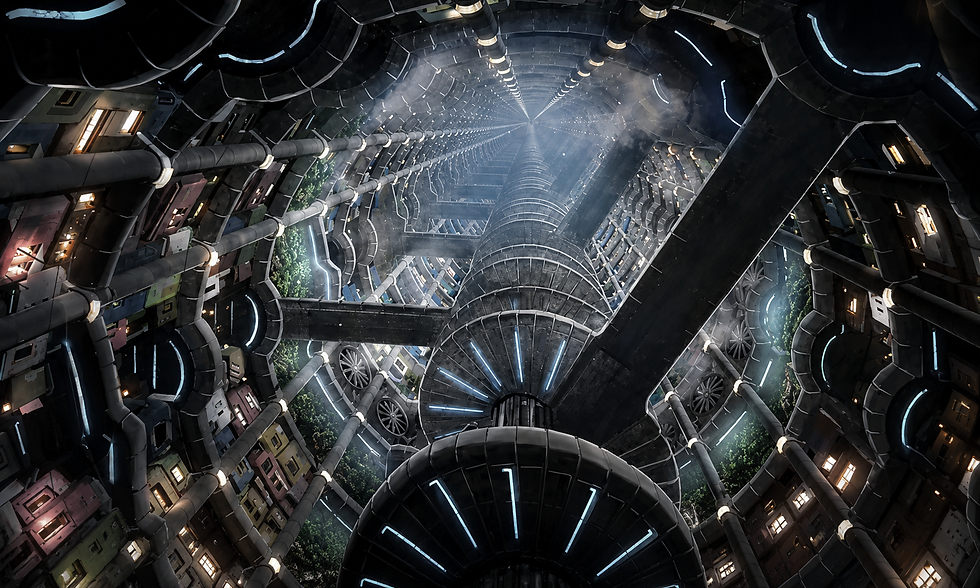
And perhaps the most remarkable twist exists outside the story altogether.
A fictional civilization built beneath the earth became one of television's largest science-fiction productions because a self-published author uploaded a short story — and readers wanted to know what happened next.
Comments