






Halloween Horror Nights: When the Biggest Scare Is the Crowd

For horror fans, Universal Orlando’s Halloween Horror Nights has become almost a pilgrimage. Elaborate haunted houses, movie-quality sets, roaming scare actors and massive intellectual properties have transformed the seasonal event into one of the most recognizable Halloween attractions in America.
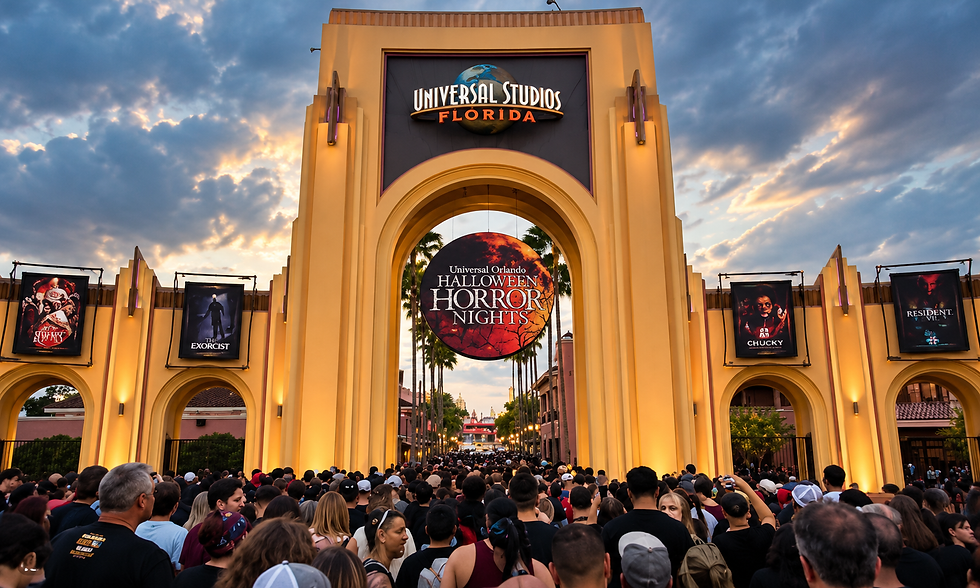
But there is another side to Halloween Horror Nights that becomes apparent shortly after walking through the gates: the crowds.
Halloween Horror Nights has become so popular that on busy evenings, navigating Universal Studios Florida can feel like moving through a packed concert venue. Walkways fill with people, food stands develop long lines and waits for the most popular haunted houses can consume a significant portion of the night.
In other words, the scariest thing at Horror Nights may be realizing how few houses you can actually experience before the park closes.
Universal's 2026 event features 10 haunted houses, along with scare zones, entertainment, food and attractions. But seeing everything during a single night can be difficult without careful planning — or spending considerably more money.
That is where Halloween Horror Nights begins to feel like two very different events.
Guests purchasing standard admission receive access to the same event, but they generally enter the traditional standby lines for the haunted houses. On crowded nights, those waits can become enormous. Orlando Informer reports that waits for popular houses on peak nights can reach two or even three hours.
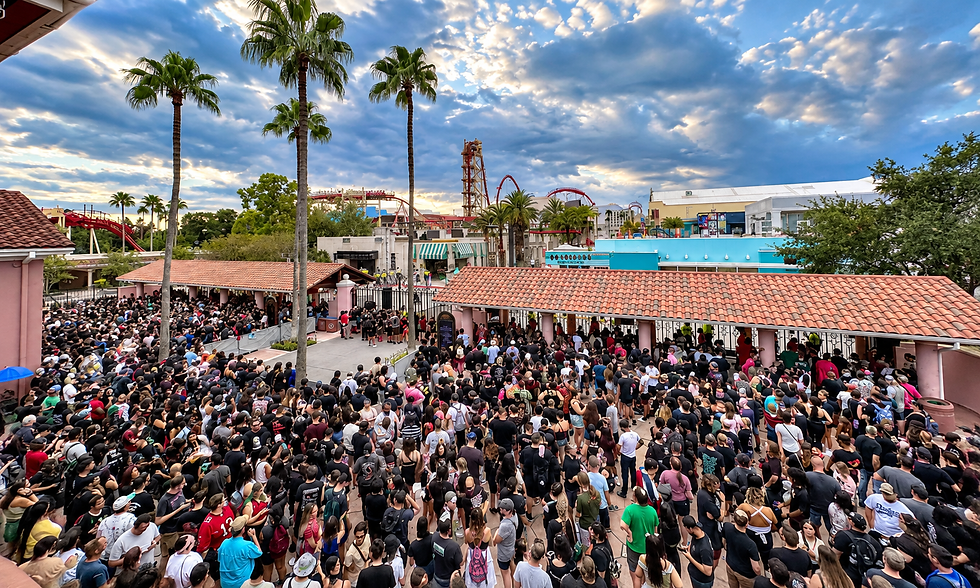
Pay more, however, and the experience changes.
Halloween Horror Nights Express allows guests to use a shorter line once at each haunted house and participating attraction. Even Express isn't necessarily instantaneous. On particularly crowded evenings, the Express line may still represent roughly half the posted standby wait.
Then there are the R.I.P. Tours.
These premium guided experiences move guests through the event with dramatically better access. The standard R.I.P. Tour includes priority entry to haunted houses while guests are with their guide, along with other perks. The more expensive private version provides an even more exclusive experience.
Universal has even created Premium Scream Night, a limited-capacity experience designed specifically around something regular attendees increasingly crave: fewer people and shorter waits.
There is nothing inherently unusual about charging extra for premium access. Airlines have first class. Concerts have VIP sections. Theme parks have been selling line-skipping products for years.
But Halloween Horror Nights illustrates just how dramatically money can change a theme-park experience.
A standard-admission guest might spend a substantial portion of the evening standing in lines. An Express guest can potentially experience considerably more. A guest willing to spend hundreds of dollars more for an R.I.P. Tour can move through the event with privileges that make the experience almost unrecognizable compared with that of someone standing in a massive standby queue.
The result is an increasingly tiered Horror Nights.
And ironically, the better Universal becomes at producing Halloween Horror Nights, the greater the problem becomes. Major franchises, elaborate houses and social-media attention continue attracting enormous crowds. Success creates demand; demand creates congestion; and congestion makes premium access increasingly valuable.
For Universal, that is a powerful business model.
For guests, it creates a harder question: How much are you willing to spend to actually experience the event you already paid to enter?
Halloween Horror Nights remains an extraordinary production. The craftsmanship inside the houses can be spectacular, and few Halloween events operate on its scale. But visitors should understand the economics before arriving.
At Halloween Horror Nights, your admission ticket gets you through the gates.
How much of the horror you actually get to experience may increasingly depend on how much more you're willing to pay.


Comments