






Biden Restricted Hundreds of White House Press Passes. Trump Banned Three News Organizations. Are They the Same?

Both administrations have been accused of restricting journalists, but the circumstances—and the extent of the restrictions—are significantly different.
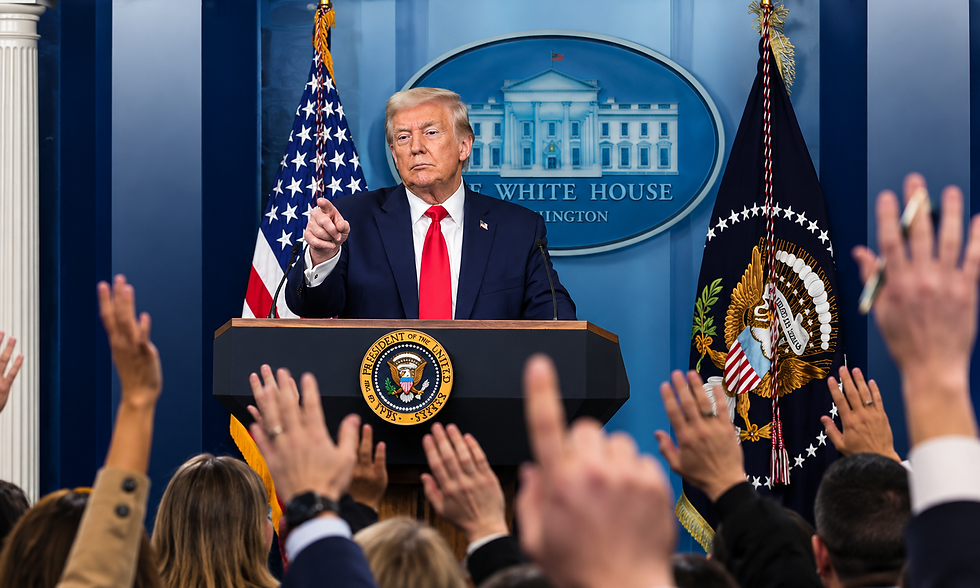
WASHINGTON — When President Donald Trump barred CNN, MS NOW and Politico from the White House in September 2026, his supporters quickly pointed to an uncomfortable question for Trump's critics: Didn't President Joe Biden restrict hundreds of reporters himself?
The answer is yes—but with an important qualification.
The Biden administration changed White House credentialing rules in 2023, resulting in roughly 500 fewer journalists holding permanent White House “hard passes.” Politico reported the reduction at 442. But those journalists were not banned from covering the White House. Reporters who lost or did not obtain permanent credentials remained eligible to request temporary day passes.
Trump's action is different. His administration has explicitly barred three entire news organizations—CNN, MS NOW and Politico—from White House grounds. Reporters from those organizations were turned away beginning Sept. 19, and their credentials were confiscated. The organizations have now sued the administration, alleging violations of the First and Fifth Amendments.
The distinction matters.
What Biden Actually Did
In May 2023, the Biden White House announced that existing hard passes would expire that July and journalists would have to reapply.
A hard pass allows a reporter expedited entry and unescorted access to White House press areas. Under the new rules, applicants had to satisfy several requirements, including employment by a news organization, accreditation through a congressional or Supreme Court press gallery, a Washington-area address and evidence they had used White House access for work within the previous six months.
The administration argued that many permanent credentials weren't being used. At the time, White House officials estimated that roughly 40 percent of hard-pass holders hadn't used their credentials during the preceding 90 days.
The result was dramatic.
Approximately 500 journalists no longer possessed hard passes. One contemporary count placed the reduction at 442, which is the source of the claim now circulating that “Biden banned 440 reporters.”
But “banned” isn't technically accurate.
Those reporters could still request day passes. Day-pass holders face additional inconvenience—they must apply each day and be escorted into the press area—but once inside, the D.C. Circuit noted, they possess the same press-area privileges as hard-pass holders.
Reporter Simon Ateba challenged Biden's policy in federal court after losing his hard pass. The D.C. Circuit ultimately upheld the rules in 2025, describing the policy as “reasonable and viewpoint neutral.” Ateba continued receiving day passes when he requested them.
That doesn't mean Biden escaped legitimate press-access controversies. In 2023, for example, the White House denied New York Post correspondent Steven Nelson access to a Biden event. Nelson questioned whether the decision was connected to his aggressive coverage of Hunter Biden; the White House said it was unable to accommodate his credential request. Photographs reportedly showed empty press seats at the event.
What Trump Has Done
Trump's September 2026 action goes considerably further.
He announced that CNN, MS NOW and Politico would be barred from the White House, accusing them of publishing “fake news.” Reporters from the three organizations were subsequently denied entry, and credentials were confiscated.
Unlike Biden's credentialing standards, Trump's restriction explicitly identifies particular news organizations.
That is the crucial constitutional difference.
CNN, MS NOW and Politico argue that the government is punishing them because of their journalism. Their lawsuit describes the action as a “blatant violation” of the First Amendment and also raises due-process objections under the Fifth Amendment.
Trump's White House rejects that argument. In a statement defending the decision, the administration declared that “White House access is a privilege—not a right” and pointed directly to previous restrictions involving Biden and other Democratic administrations.
The dispute has become significant enough that the five major television networks—ABC, CBS, CNN, Fox News and NBC—halted their shared video pool coverage after the administration prevented CNN from performing its scheduled pool assignment.
500 Reporters Versus Three Organizations
Viewed purely as numbers, Biden's policy appears larger: approximately 500 journalists lost permanent credentials compared with three organizations banned by Trump.
But numbers don't tell the entire story.
Biden imposed general eligibility standards governing permanent credentials. Whether those standards were unnecessarily restrictive is a legitimate subject for debate, and critics at the time worried that the rules could disadvantage freelancers and smaller news organizations.
Yet reporters who lost hard passes weren't prohibited from entering the White House. They could seek day passes, and a federal appeals court later concluded that the rules were viewpoint neutral.
Trump has taken a different approach: he has identified three specific organizations and ordered them excluded while publicly attacking the content of their reporting.
That makes saying “Biden banned 440 reporters, while Trump banned only three outlets” misleading.
A more accurate description is this:
Biden tightened permanent White House credentialing requirements, leaving roughly 442 to 500 fewer journalists with unrestricted hard-pass access. Trump has explicitly barred three news organizations from White House grounds because of what he says is false reporting.
Both actions raise legitimate questions about presidential power over access to the nation's most important political institution.
But they aren't the same policy.
And that distinction may soon be tested in court.
Comments