






When Will Robots Be Ready to Disrupt the American Job Market?

For decades, humanoid robots capable of doing real work were a science-fiction staple more than an economic forecast. That's changed fast. In 2026, humanoid robots have moved from lab demonstrations to actual factory floors — but the honest answer to when they'll be competent and plentiful enough to meaningfully disrupt the U.S. job market is: sooner than skeptics expected, later than the hype suggests, and unevenly across industries.
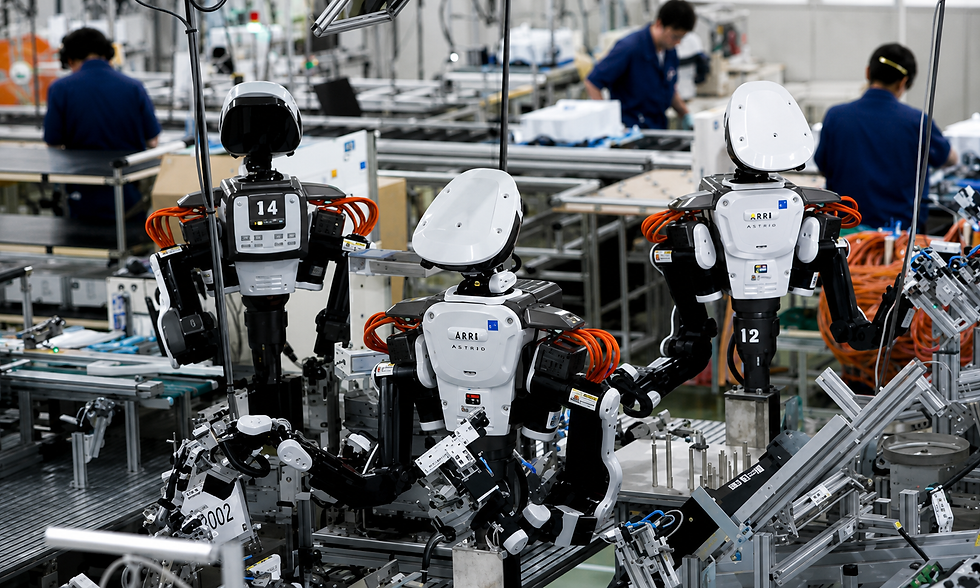
Where things actually stand right now. As of 2026, hundreds to low thousands of humanoid robots are deployed industrially, mostly in pilot programs at companies like BMW and logistics giant GXO, alongside Tesla's internal deployment of robots in its own factories. Prices have fallen dramatically — from research platforms costing well over $1 million in 2020 to commercial units now available for $13,500 to $90,000, with Tesla targeting $20,000-$30,000 for its Optimus robot and some companies even offering subscription models around $499 a month. That's a meaningful shift, but it's still far from the smartphone-level pricing and reliability analysts say is needed for true mass adoption.
The technical bottlenecks are real. Industry analysts point to four specific barriers that must be crossed before the market scales meaningfully: certified fenceless safety (robots working safely alongside humans without cages), sustained multi-shift uptime, reliable dexterity and mobility, and cost reduction to commercially viable levels. Battery technology remains a binding constraint — current batteries limit continuous operation to just 2-4 hours under industrial workloads. Dexterous hands, meanwhile, represent roughly 31% of a humanoid robot's total bill of materials, making them the single largest cost driver, and fewer than 10 suppliers worldwide currently produce the high-precision actuators these robots need — a serious supply chain chokepoint standing between today's pilot programs and tomorrow's mass deployment.
The market size forecasts vary wildly, which itself is telling. MarketsandMarkets projects the global humanoid robot market growing from roughly $4-6 billion in 2026 to $13.8 billion by 2028. Goldman Sachs projects $38 billion by 2035. Morgan Stanley's more aggressive long-range forecast envisions a $5 trillion market by 2050, built on an assumption that more than a billion humanoid robots could eventually be in operation. That's a massive range, reflecting genuine uncertainty about how fast the remaining technical and manufacturing hurdles will fall.
Most realistic timelines cluster around a similar shape. Industry analysts generally expect 2025-2027 to remain the era of early, narrow deployments — hundreds to low thousands of units concentrated in automotive manufacturing, warehousing, and logistics, where tasks are more structured and repetitive. Broader scale-up is generally projected for 2028-2035, with consumer and household applications arriving later still, likely not before 2028-2030 at the earliest.
On job disruption specifically, most economists urge caution against overly precise predictions. There is no reliable "humanoid-only" job-loss estimate; the widely cited figures blend all forms of automation together, such as the World Economic Forum's 2025 estimate of 92 million jobs displaced against 170 million created by 2030 — a projection about automation broadly, not humanoid robots specifically. Early evidence suggests task-level transformation is more likely than wholesale job replacement in the near term, with structured physical labor roles — warehouse picking, assembly line work, repetitive logistics tasks — facing the earliest pressure. Notably, even as automation displaces certain roles, robotics engineering salaries have reportedly risen 25-40%, reflecting surging demand for the humans who build, train, and maintain these systems.
The honest bottom line: meaningful, broad-based labor market disruption from humanoid robots is unlikely to arrive overnight, but it's also no longer a distant hypothetical. The 2026-2030 window looks set to bring steadily expanding deployment in narrow, structured industrial roles, with the more sweeping, economy-wide impact many technologists imagine most plausible sometime in the following decade — contingent on whether battery, actuator, and cost barriers fall as quickly as the industry's most optimistic forecasts assume.



Comments