






Attorney General Nomination Faces Scrutiny as Epstein Survivors and Senators Raise Concerns

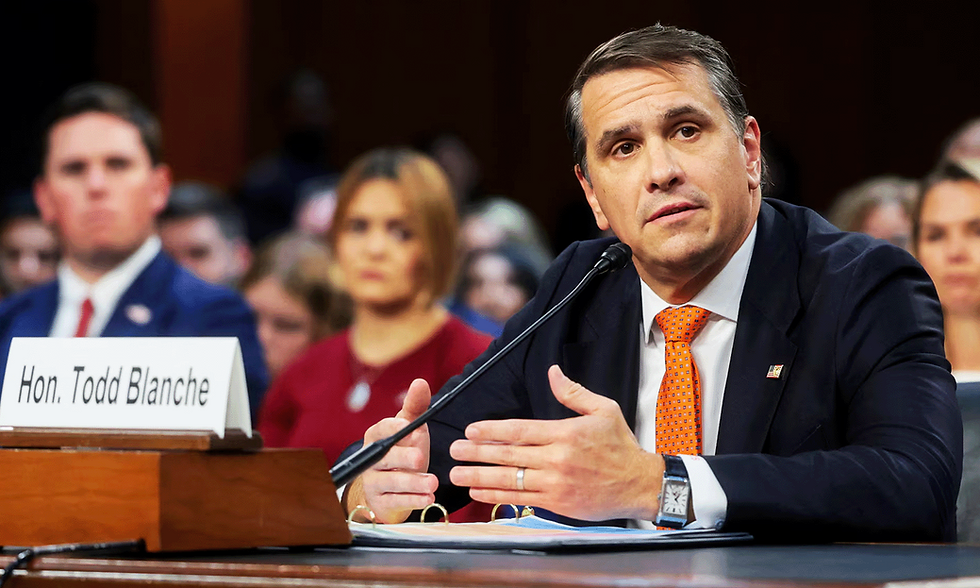
Todd Blanche's nomination to serve as the next U.S. attorney general has become one of the most closely watched confirmation battles in Washington, drawing opposition from Jeffrey Epstein survivors while also fueling a broader debate over the future independence of the Justice Department.
The controversy intensified after more than two dozen Epstein survivors urged Republican Sens. Thom Tillis of North Carolina and John Cornyn of Texas to reject Blanche's nomination. In a public letter, the survivors criticized Blanche's handling of the Justice Department's release of Epstein-related records, arguing that victims' identifying information was exposed while information about alleged abusers remained redacted. They also said a meeting with Blanche did little to address their concerns, describing it as dismissive and lacking accountability.
Blanche, who currently serves as acting attorney general, met with several Epstein survivors after Sen. Tillis said he wanted the meeting to occur before deciding whether to support the nomination. Tillis indicated that hearing directly from survivors was an important part of evaluating Blanche's fitness to lead the Justice Department.
Beyond the Epstein case, Blanche's nomination has become intertwined with larger political questions about the Justice Department's role. Democratic lawmakers have argued that the department must remain independent from political influence and have questioned whether Blanche, who previously represented President Donald Trump as a defense attorney, could maintain that independence if confirmed. Senate Democrats have also criticized actions taken during Blanche's tenure as acting attorney general, arguing they raise concerns about the department's impartiality.
At the same time, Blanche's confirmation has encountered resistance from within the Republican Party. Sens. Tillis and Cornyn have delayed advancing the nomination while seeking written assurances from the administration regarding a separate controversy involving a proposed "anti-weaponization" compensation fund and provisions tied to an IRS settlement. Those issues have complicated what was already expected to be a closely contested confirmation process.
The outcome of Blanche's nomination could have lasting implications for the Justice Department. Supporters argue he is qualified by his legal experience and current leadership role, while critics contend the department needs leadership that is viewed as independent and capable of restoring public confidence.
As the Senate weighs the nomination, the debate has expanded beyond one individual, becoming a broader discussion about victims' rights, prosecutorial independence, and the public's trust in one of the nation's most powerful law enforcement institutions.



Comments