






The Murders of Nahida Bristy and Zamil Limon: Inside the Case That Shook USF
- Lafonda Smith

- Aug 24
- 6 min read
TAMPA, Fla. — When two University of South Florida graduate students disappeared on April 16, their friends noticed almost immediately.
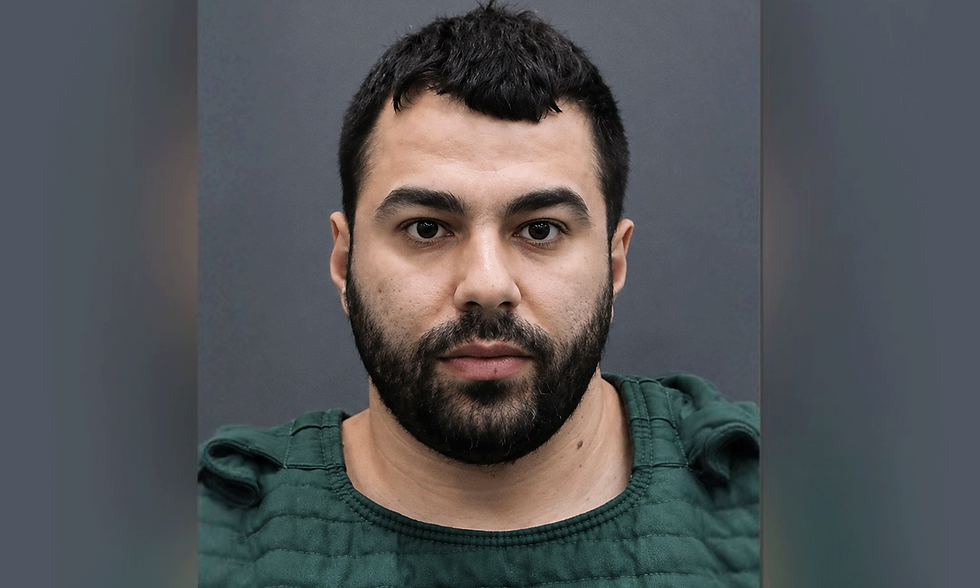
Nahida Bristy and Zamil Limon were both 27, both from Bangladesh and both pursuing advanced degrees at USF. They were described as dependable students who attended meetings, answered messages and took their academic responsibilities seriously. Their sudden silence was so out of character that friends quickly feared something was wrong.
What began as a search for two missing international students would, within days, become one of Tampa Bay's most disturbing murder investigations of 2026.
Investigators ultimately recovered both students' remains, and Limon's off-campus roommate, Hisham Saleh Abugharbieh, 26, was charged with two counts of first-degree premeditated murder. Prosecutors have since announced that they intend to seek the death penalty.
Abugharbieh has pleaded not guilty, and the allegations against him remain unproven. His jury trial is currently scheduled for November 2027.
The publicly disclosed evidence, however, has provided an unusually detailed picture of what investigators believe happened.
Two Students Building Lives in America
Bristy and Limon had traveled thousands of miles to Tampa for education rather than adventure or celebrity.
Bristy entered USF in fall 2025 as a doctoral student in chemical engineering, pursuing research connected to engineering and sustainability. Limon arrived the previous year and studied geography and environmental science and policy.
Both came from Bangladesh. USF later described them as valued members of the university community.

Published reports have described Bristy and Limon as a couple who were considering marriage. But they did not live together.
Bristy lived on campus. Limon lived at Avalon Heights, an off-campus apartment complex near USF, where one of his roommates was Abugharbieh.
That living arrangement would become central to the investigation.
April 16
The timeline begins on Thursday, April 16.
According to authorities, Bristy was last seen at a science building on the USF campus. Limon was last seen at the off-campus apartment he shared with Abugharbieh. By April 17, both were reported missing.
Initially, authorities were dealing with a missing-person investigation. But as investigators gathered information, the circumstances became increasingly suspicious.
The Hillsborough County Sheriff's Office eventually assumed the lead in both cases and classified Bristy and Limon as missing and endangered. Searches expanded across Hillsborough and Pinellas counties.
Detectives also began examining the people closest to the missing students.
That brought them to Limon's apartment.
What Investigators Say They Found
According to a prosecution report summarized by the Associated Press, another roommate told investigators that Abugharbieh had used a cart during the night of April 16 to move cardboard boxes from his room to the apartment complex's trash compactor.
Investigators searched the compactor.
Inside, authorities say, they discovered belongings associated with Limon, including his wallet, USF identification card, credit card, eyeglasses and clothing that appeared to contain blood.
Detectives subsequently returned to the apartment with a search warrant.
What they allegedly found inside dramatically changed the direction of the case.
Investigators reported detecting blood residue leading from the kitchen toward Abugharbieh's bedroom. They also found what prosecutors described as a substantial amount of blood that had soaked into the bedroom carpeting.
Inside Limon's locked bedroom, investigators discovered another troubling piece of evidence: Bristy's USF identification and credit cards.
The case was no longer simply about two students who had stopped answering their phones.
Investigators were confronting evidence suggesting something violent had happened inside the apartment.
Phones, Cars and a Bridge
Modern homicide investigations often depend as much on digital trails as eyewitnesses, and the USF case appears to be an example.
Authorities analyzed cellphone location information and license-plate-reader data associated with Abugharbieh's vehicle and Limon's phone.
Investigators say those records helped lead them toward the Howard Frankland Bridge area.
On April 24—eight days after Limon disappeared—his body was recovered.
According to authorities, Limon had suffered multiple stab wounds and appeared to have been bound.
The missing-person investigation had become a homicide case. Bristy was still missing. But investigators say evidence was already pointing toward her death as well.
The Arrest
The same day Limon's body was found, deputies encountered Abugharbieh at his family's home near the university while responding to a domestic-violence incident.
According to authorities, family members were removed from the residence, but Abugharbieh remained inside and barricaded himself.
A tactical response followed.
Deputies deployed crisis negotiators along with a drone and robot before Abugharbieh eventually emerged and surrendered.
He initially faced a collection of charges related to the investigation, including accusations involving the unlawful movement of a body, failure to report a death, evidence tampering, false imprisonment and battery.
Then came the most consequential charges.
On April 25, the Hillsborough County Sheriff's Office announced that evidence had been presented to the State Attorney's Office and that Abugharbieh was additionally charged with two counts of first-degree murder with a weapon, premeditated—one for Limon and another for Bristy.
At that point, Bristy's remains had not yet been identified.
The Search for Nahida
Two days after Limon's discovery, the case took another grim turn.
On April 26, two kayakers were in the mangroves in Pinellas County when one reportedly snagged a bag with a fishing line.
As the kayaker approached, he detected a powerful odor. Inside or around the bag were what appeared to be human remains.
Authorities were called.
Because of the condition of the remains, investigators could not immediately make an identification through fingerprints. DNA testing was required.
On May 1, Sheriff Chad Chronister announced that the remains belonged to Nahida Bristy.
Investigators also alleged that Bristy's blood had been detected on the passenger seat of Abugharbieh's vehicle.
Both missing students had now been found dead.
Questions About What Happened Before the Murders
One particularly disturbing aspect of the case involves allegations concerning Abugharbieh's behavior before April 16.
According to the prosecution report, investigators interviewed his mother, who told detectives that her son had experienced difficulty managing anger and had previously been violent toward family members.
The families of Bristy and Limon subsequently raised broader questions about whether warning signs had been overlooked.
They called for an investigation into Avalon Heights and questioned resident screening, security and whether complaints involving Abugharbieh had received sufficient attention. The families also asked that the victims' remains and possessions be returned to Bangladesh.
Avalon Heights is off-campus housing rather than a USF-owned residence.
USF subsequently removed the property from university housing listings, according to published reports.
Those concerns have given the case a second dimension beyond the criminal prosecution: whether anything could have been done to identify a potentially dangerous situation before two students were killed.
The Digital Evidence
Another potentially significant component of the prosecution involves Abugharbieh's alleged internet activity.
Court-related reporting indicates investigators examined online searches made before the students disappeared, including disturbing inquiries concerning what could happen if a human body were placed inside a garbage bag and discarded.
The Tampa Bay Times has reported that investigators are also examining Abugharbieh's use of ChatGPT as part of the case.
Such evidence could become important at trial, particularly if prosecutors contend that searches demonstrate planning or consciousness of guilt.
But internet searches alone do not prove murder. Their significance will depend on authentication, timing, context and how they connect to physical and forensic evidence. Defense attorneys will have an opportunity to challenge the state's interpretation before a jury.
A Death-Penalty Case
The legal stakes escalated again in May.
A Hillsborough County grand jury indicted Abugharbieh on two counts of first-degree murder and additional charges. The State Attorney's Office then filed notice that prosecutors intend to seek the death penalty if he is convicted.
Abugharbieh entered a written plea of not guilty on May 18.
He remains accused, not convicted, and the prosecution will have to establish its case beyond a reasonable doubt.
The proceeding is unlikely to move quickly. According to court records reported by WUSF, the jury trial is presently scheduled to begin Nov. 3, 2027.
That means questions about motive, the exact sequence of events inside the apartment and precisely what happened to Bristy and Limon may remain unresolved publicly for some time.
Remembering Bristy and Limon
The brutality alleged in the criminal case can easily overshadow who the victims were.
USF has attempted to prevent that.
Hundreds of students, faculty members and community members gathered for a May 1 vigil honoring Bristy and Limon. University officials described two young scholars who had traveled from Bangladesh to pursue demanding academic careers in the United States.
USF also honored them during commencement and awarded them posthumous degrees.
For Tampa, the case remains disturbing precisely because the victims' lives seemed so far removed from the violence that ended them.
They were international graduate students pursuing doctorates, building careers and creating lives thousands of miles from their families.
Within roughly a week of their disappearance, investigators say a trail of discarded possessions, blood evidence, cellphone records and vehicle-location data led them from an apartment near USF to the waters surrounding Tampa Bay.
Now the criminal justice system must determine whether that evidence proves what prosecutors allege: that the man sharing Limon's apartment deliberately murdered both students and attempted to conceal what he had done.
The case began with two empty seats and unanswered messages.
It has become a double-murder prosecution in which the State of Florida is prepared to seek the ultimate punishment.



Comments