






El Salvador's Mega-Prison Experiment: What Happened When a Country Locked Up Its Gangs

For decades, El Salvador was synonymous with gang violence. MS-13 and Barrio 18 controlled neighborhoods, extorted businesses, recruited children and enforced territorial boundaries that ordinary citizens crossed at their peril. In 2015, El Salvador recorded roughly 105 homicides per 100,000 residents, one of the highest murder rates in the world. Today, the country looks remarkably different.
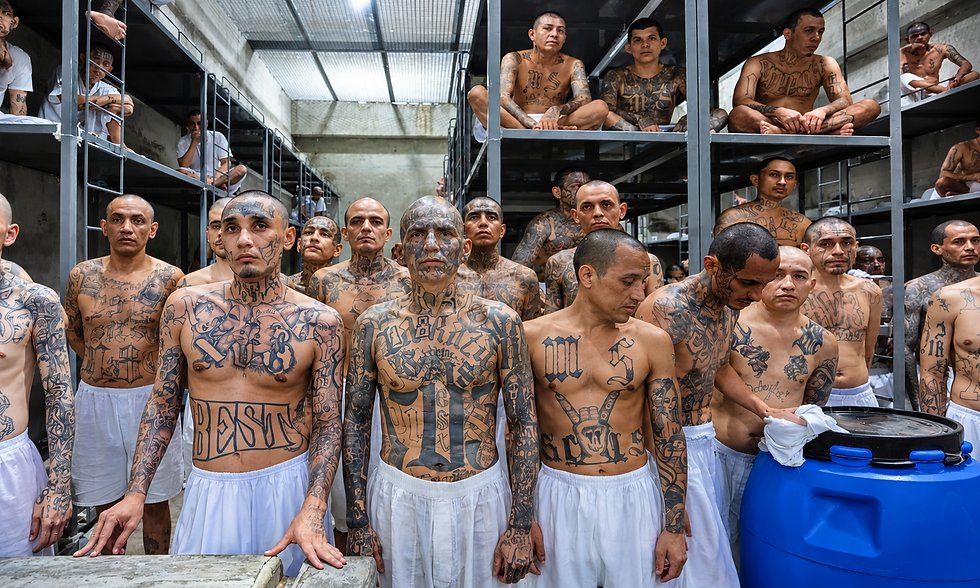
At the center of that transformation is President Nayib Bukele's aggressive campaign against organized crime—and its most visible symbol, the Center for the Confinement of Terrorism, better known as CECOT.
The massive prison, opened in 2023, was built to hold as many as 40,000 inmates. Images released by the government show heavily tattooed prisoners packed into enormous cellblocks under extraordinary levels of security. But CECOT represents only part of a much larger crackdown.
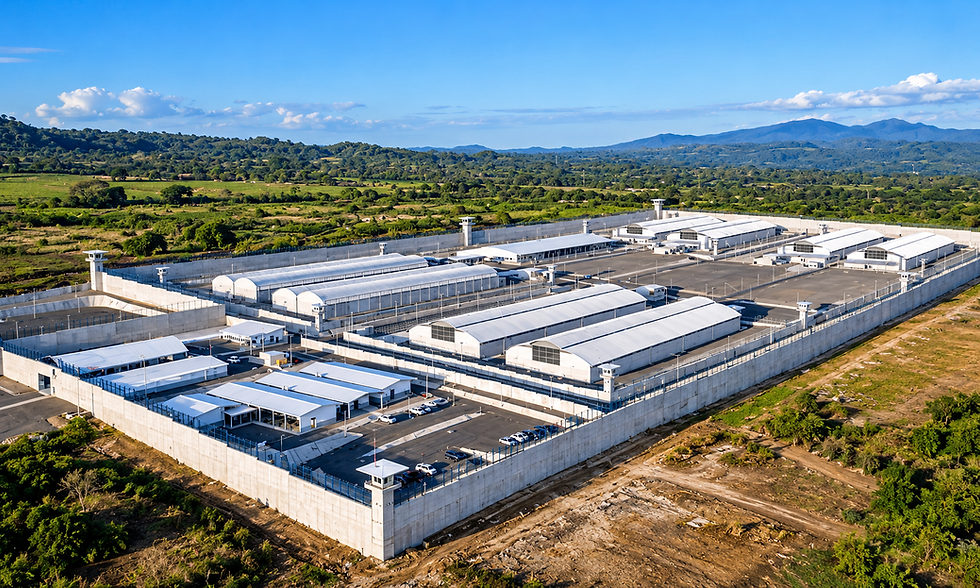
Following an eruption of gang killings in March 2022, Bukele's government declared a state of emergency and began arresting suspected gang members on an enormous scale. More than 80,000 people were subsequently detained. By 2026, Human Rights Watch estimated that approximately 118,000 people were incarcerated nationwide—nearly 2 percent of El Salvador's population.
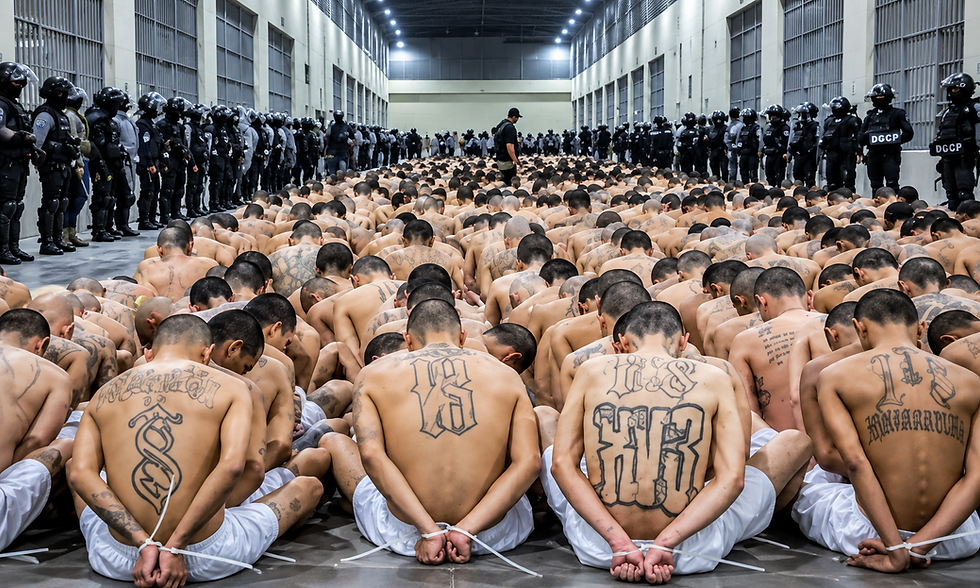
Whatever one's opinion of Bukele's methods, the change in public safety has been extraordinary.
From Murder Capital to Remarkably Safe
According to International Monetary Fund analysis, El Salvador's homicide rate fell to approximately 1.9 murders per 100,000 residents in 2024. That represents an astonishing decline from more than 100 per 100,000 less than a decade earlier.
The effects extend beyond homicide statistics.
The IMF found that only about 5 percent of Salvadorans considered violence, gangs, crime and public safety their country's leading concern in 2023, compared with approximately 60 percent in 2015.
Businesses have benefited as well.
For generations, gang extortion functioned almost like an unofficial tax. Businesses operating in gang-controlled neighborhoods could be forced to make payments simply to remain open. The IMF reports that the direct economic cost of crime declined from approximately 6.4 percent of GDP in 2014 to 3.9 percent in 2022.
Tourism has surged alongside the improvement in security. The number of inbound tourists has roughly doubled compared with pre-pandemic levels, according to IMF analysis. The organization has specifically identified improved security as an important contributor to tourism, business confidence and economic activity.
For ordinary Salvadorans, perhaps the most important transformation is harder to measure.
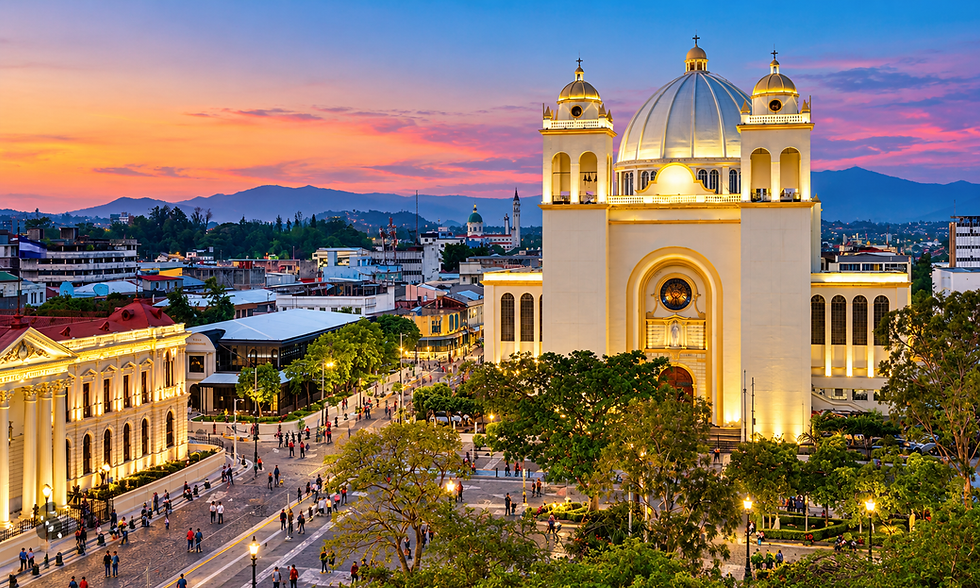
Neighborhoods once controlled by gangs have become accessible again. Residents can travel between communities with far less fear. Businesses can operate in areas once dominated by extortion. Families who spent years worrying about children being recruited into gangs are living under fundamentally different security conditions.
The Other Side of Bukele's Crackdown
But El Salvador's transformation has come at a serious cost.
Human-rights organizations argue that the government has arrested thousands of innocent people alongside gang members.
Human Rights Watch has documented allegations of arbitrary detention, torture, enforced disappearances, deaths in custody and arrests based on appearance, tattoos or uncorroborated accusations. The organization says hundreds of detainees have died during the state of emergency and warns that weakened due-process protections make it difficult for innocent prisoners to challenge their detention.
Those allegations complicate the otherwise remarkable security story.
The debate surrounding El Salvador is therefore no longer about whether the crackdown reduced gang violence. The evidence that violence has dramatically declined is overwhelming, even as questions remain about the transparency of official crime statistics.
The larger question is whether those results could have been achieved without sacrificing so many legal protections.
Bukele's supporters argue that previous governments protected criminals while ordinary citizens lived in fear. His critics counter that a government powerful enough to imprison suspected criminals without normal safeguards can eventually use that same power against innocent citizens and political opponents.
Both realities now define El Salvador.
The country has accomplished something that once seemed nearly impossible: it broke the territorial power of some of the world's most notorious street gangs and transformed everyday security. But it did so through a system that gives the government extraordinary power over individual liberty.
For countries watching El Salvador as a possible model, that may ultimately be the most important lesson.
The Bukele experiment demonstrates what an overwhelmingly aggressive campaign against organized crime can accomplish.
It also demonstrates the price a society can be asked to pay for it.



Comments